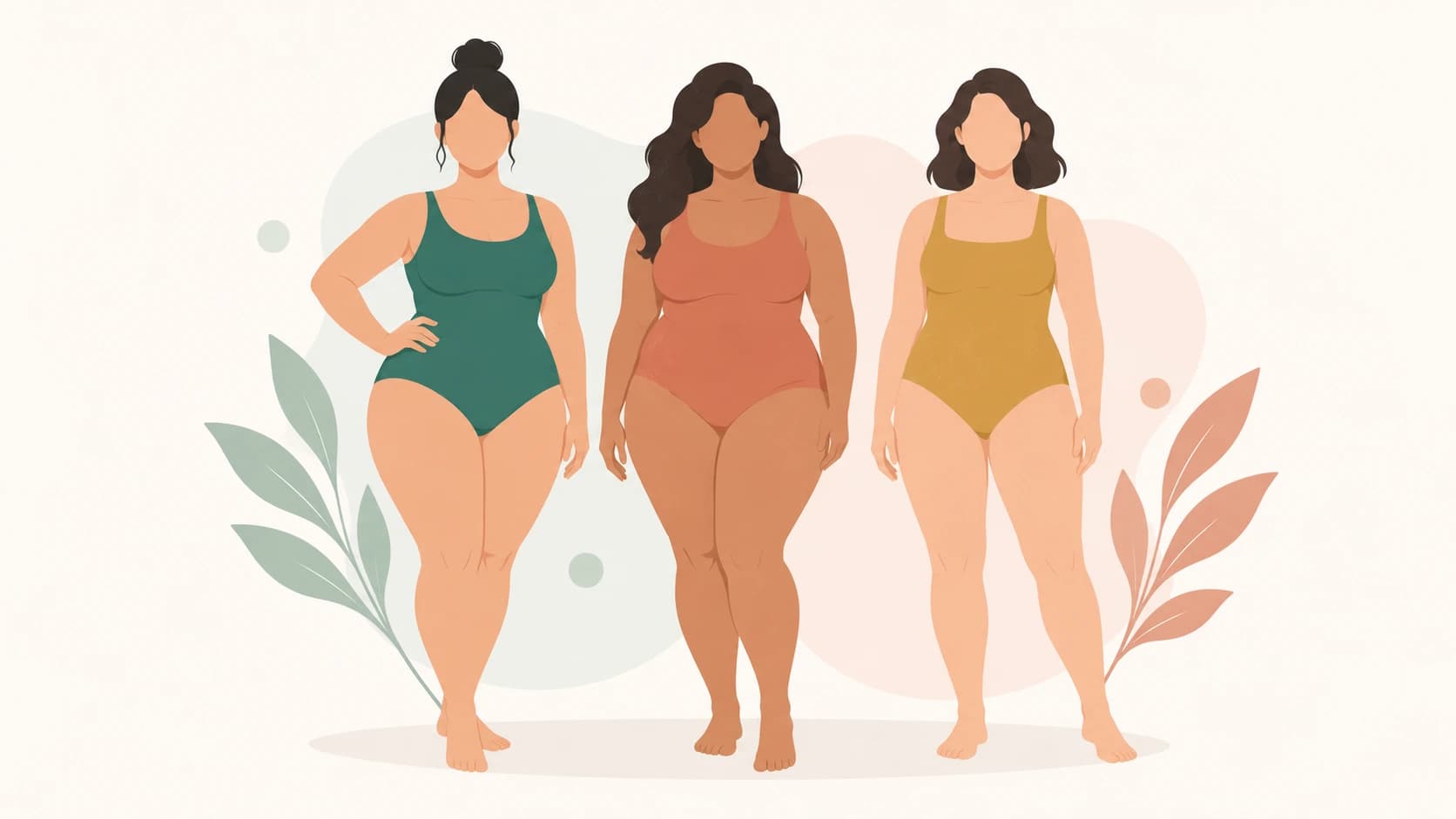
A common assumption is that body shape categories like hourglass, pear, apple, and rectangle only really apply at smaller sizes, and that plus-size bodies need a separate system. That's not accurate: the classification is based entirely on the ratio between bust, waist, and hips, and that ratio-based logic works identically at every size. A plus-size hourglass needs the exact same bust-to-hip closeness and waist-to-average ratio as a straight-size hourglass — nothing about the rule changes. This guide clears up where the myth comes from and shows how to find your shape confidently at any size.
Ready to put this into practice?
Try the free body type calculator — instant results, nothing stored.
Body shape is about ratio, not size
Every shape classification used on this site is percentage-based: hourglass requires bust and hips within about 5% of each other and a waist no more than 75% of their average; pear requires hips more than 5% larger than bust; apple requires bust more than 5% larger than hips; rectangle is everything else. None of these rules reference an absolute measurement threshold — a 50-inch bust and hip pair within 5% of each other qualifies for hourglass exactly the same way a 34-inch pair does. Size and shape are simply two different things: size describes how big your measurements are in absolute terms, while shape describes the relationship between them.
Where the "plus size doesn't have a shape" myth comes from
This myth mostly comes from historical gaps in plus-size fashion marketing and content, where style guidance for larger bodies was underdeveloped compared to guidance for smaller ones — not from any actual limitation in how shape classification works. Some outdated style advice also conflated "plus size" with a single assumed shape (often apple), which is inaccurate: plus-size bodies are distributed across all four shapes just as straight-size bodies are, in comparable proportions, because the same measurement ratios apply regardless of overall size.
Why the calculator works the same at any measurement
Because classification is percentage-based rather than tied to fixed inch or centimetre thresholds, the calculator produces the exact same type of result (hourglass, pear, apple, or rectangle) no matter how large or small your three input measurements are. There is no separate "plus size version" of the rules, and none is needed — you can enter your bust or chest, waist, and hip measurements exactly as you would at any other size and get an equally precise classification.
Shopping and styling tips by shape, at any size
Once you know your shape, the styling principles are the same ones covered in each shape's full guide — balancing proportions for pear, drawing the eye downward for apple, maintaining waist definition for hourglass, adding shape for rectangle — regardless of size. The practical difference at plus sizes is more about brand selection than styling principle: not every brand extends every silhouette (like wrap dresses or A-line skirts) into the full plus-size range, so it's worth checking a brand's plus-size line specifically rather than assuming their straight-size recommendations carry over. If you also need to convert your measurements to a specific brand's size chart, the dress size calculator handles that conversion the same way at any size.
Measuring accurately at any size
The measuring technique itself doesn't change with size: bust or chest at the fullest point, waist at the narrowest point, hips at the widest point, tape kept level and snug but not tight. One practical note that matters more at larger measurements is tape length — a standard 60-inch (150cm) sewing tape is enough for the vast majority of measurements, but if any of your three numbers approaches that limit, use a tailor's tape rated for a longer range, or two shorter tapes joined and marked at the join point, so the reading isn't cut short. A tape that's too short and gets doubled back on itself is one of the more common sources of an inaccurate hip or bust measurement at larger sizes.
Finding brands that fit every shape, not just one
Because plus-size fashion has historically had less investment than straight-size fashion, silhouette variety can still lag behind at some retailers — meaning the specific cut recommended for your shape (a fit-and-flare for hourglass, an A-line for pear) may be easier to find at some plus-size-focused or size-inclusive brands than others. It's worth building a shortlist of two or three brands that consistently carry your shape's recommended silhouettes in your size range, rather than assuming every plus-size collection covers the same variety a straight-size collection does. This is a market-coverage issue, not a reflection of which shapes exist at plus sizes — all four shapes are equally valid and equally common at any size, even where brand selection hasn't fully caught up yet.
Frequently Asked Questions
Does body shape classification work differently for plus-size bodies?
No. The classification rules are percentage-based (comparing bust, waist, and hips as ratios, not absolute numbers), so they apply identically regardless of size. There is no separate rule set for plus-size measurements.
Is there a specific "plus size body shape"?
No — plus-size bodies are distributed across the same four shapes (hourglass, pear, apple, rectangle) as any other size range, in similar proportions. The idea of a single default plus-size shape is a myth, not a measurement-based classification.
Why do some plus-size style guides only mention certain shapes?
This usually reflects gaps in the guide's coverage rather than a real limitation — historically, plus-size style content has been less developed than straight-size content, which left some shapes underrepresented in older guides. It doesn't mean those shapes don't occur at plus sizes.
Should I use a different calculator for plus-size measurements?
No — the same body type calculator applies the same ratio-based rules regardless of your measurements. There's no size cutoff or separate tool needed.
Is hourglass rarer at plus sizes?
There's no measurement-based reason it would be — hourglass depends on the same bust-to-hip closeness and waist ratio at every size. Any perception that it's rarer at plus sizes more likely reflects which body types get shown in plus-size marketing than an actual prevalence difference.
What's the biggest practical difference for plus-size shopping versus styling advice?
The styling principles are identical across sizes; the practical difference is mainly brand and silhouette availability. Some brands offer a narrower range of cuts in their plus-size lines than in straight sizes, so it's worth checking specific brands' plus-size collections rather than assuming general styling advice will be equally easy to shop for everywhere.
Shape classification doesn't have a size limit built into it — the same bust-to-waist-to-hip ratios define hourglass, pear, apple, and rectangle at every size. Enter your measurements into the free calculator to get your result with the same precision as anyone else, at any size, and use your specific shape's style guide as the starting point for what to look for when shopping.
Ready to try it yourself?
Use the free body type calculator — 100% private, nothing stored.
Use Body type calculator