"Petite body shape" gets searched constantly, but it's a slightly misleading phrase — petite is a height category (generally 5'4" / 162cm and under), not one of the measurement-ratio shapes like hourglass, pear, apple, or rectangle. A petite person can be any of those four shapes, in the same proportions as someone taller, because shape classification is based on the ratio between bust, waist, and hips — not on overall height or size. This guide separates the two concepts clearly, explains why the confusion is so common, and shows how to find your actual shape regardless of height.
Ready to put this into practice?
Try the free body type calculator — instant results, nothing stored.
Petite is a height category, not a body shape
In clothing sizing, "petite" is a fit category for people at or below a certain height threshold — commonly around 5'4" (162cm) — and petite-cut garments adjust proportions like sleeve length, rise, and hem to suit a shorter torso and limbs. It says nothing about whether someone's bust, waist, and hips are proportioned like an hourglass, pear, apple, or rectangle. Two petite-height people can have completely different body shapes from each other, just as two people of average or tall height can. The mix-up happens because "petite" so often appears next to body-shape language in clothing marketing, which blurs a fit category and a shape category into what sounds like one thing.
How height and shape actually combine
Because body shape is calculated from the ratio between your bust or chest, waist, and hips — not their absolute size — the same three measurements produce the same shape classification whether you're 5'0" or 5'8". A petite hourglass and an average-height hourglass both need their bust and hips within about 5% of each other and a waist at least 25% narrower than that average; height plays no role in the calculation. What does change with height is how that shape reads visually and how clothing needs to be cut: a petite pear shape will often need a shorter rise and hem than a tall pear shape carrying the identical ratio, even though both are classified identically.
Where the "petite shapes" myth comes from
Some style content implies petite frames skew toward particular shapes — for instance, that petite women are more likely to be rectangle or less likely to be hourglass. There's no measurement-based reason this should be true, since the shape classification doesn't reference height at all; any apparent pattern is more likely a reflection of who happens to search for petite styling content, or small, non-representative samples, rather than an actual anatomical tendency. Treat claims like this as unverified rather than as a rule — the only way to know your actual shape is to check your own three measurements.
Styling by shape, adjusted for petite proportions
Once you know your actual shape from the calculator, the styling advice for that shape — necklines, silhouettes, what to emphasise or balance — applies the same way regardless of height. The petite-specific adjustment is mostly about fit, not style: shorter rises, cropped or tailored hemlines, and proportionally scaled prints or patterns so they don't overwhelm a shorter frame. See the full style guide for your specific shape (hourglass, pear, apple, or rectangle) for the complete styling breakdown, and treat any petite-specific advice as a fit adjustment layered on top of that, not a replacement for it.
Measuring accurately at a petite height
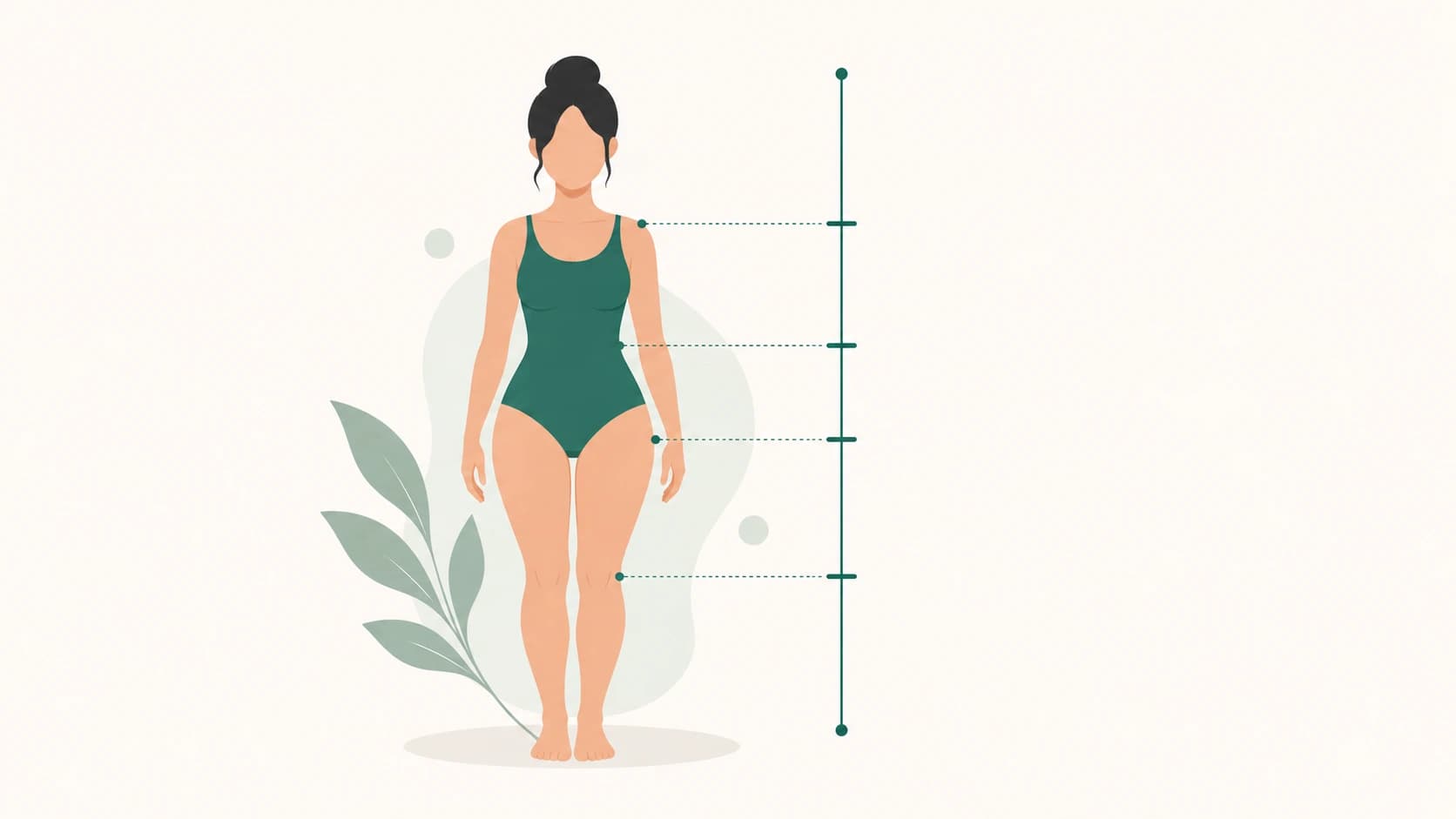
The measuring process itself doesn't change at a petite height — bust or chest at the fullest point, waist at the narrowest point, hips at the widest point, all with a soft tape kept level and snug but not tight. The one practical difference is that on a shorter torso, the vertical distance between these three landmarks is smaller, which makes it easier to accidentally measure two of them at nearly the same height if you're not checking each point individually in a mirror or with help. Take a moment to locate each landmark separately rather than measuring quickly in sequence, since a compressed torso leaves less margin for error before one measurement bleeds into another.
Shopping across petite and shape-specific sizing at once
Not every brand that offers petite sizing extends every silhouette into it — a petite line might carry straight and A-line cuts but skip wrap styles, for instance, even though wrap dresses are a common recommendation for several shapes. When a specific silhouette recommended for your shape isn't available in a brand's petite line, look at petite-friendly alternatives within the same shape's recommendations (an A-line skirt instead of a wrap dress for pear, for example) rather than assuming the styling advice itself doesn't apply to you. If you also need to convert your measurements into a specific size number, the dress size calculator handles that the same way regardless of height, since dress sizing and petite sizing are tracked as separate, combinable attributes by most brands.
Frequently Asked Questions
Is petite a body shape?
No. Petite is a height-based fit category (typically 5'4" / 162cm and under) used in clothing sizing. Body shape (hourglass, pear, apple, rectangle) is a separate classification based on the ratio between bust, waist, and hips, and applies independently of height.
Can I be petite and hourglass, pear, apple, or rectangle?
Yes — any of the four measurement-based body shapes can occur at any height, including petite. Your body shape is determined purely by the ratio between your bust or chest, waist, and hips, which the calculator applies the same way regardless of your height.
Does petite mean the same as small overall?
Not necessarily. Petite specifically refers to height. Someone petite can have any bust, waist, and hip measurements — including larger ones — since petite sizing exists at multiple size ranges (petite plus-size lines exist for exactly this reason).
How does knowing I'm petite change what I should buy?
It mainly affects proportion and fit — rise, inseam, sleeve length, and hem placement — rather than which silhouettes suit you. Your body shape result still determines which necklines, waistlines, and cuts are most flattering; petite sizing just makes sure the garment's proportions match your height as well.
Is there a petite version of the body shape calculator?
No separate version is needed. The same body type calculator applies the identical ratio-based rules regardless of your height, since height isn't a factor in the classification at all — only your bust or chest, waist, and hip measurements are used.
Why do some brands not offer certain shape-recommended styles in petite?
This comes down to a brand's own production choices, not a rule about petite frames — some brands simply produce a narrower range of silhouettes in their petite line than in their standard line. When that happens, look for a petite-friendly alternative within the same broader recommendation for your shape rather than assuming the advice doesn't apply.
Petite tells you about height; body shape tells you about proportion. They're independent, and you need your body shape result — not your height — to know which silhouettes actually flatter your frame. Run your three measurements through the free calculator to get that answer directly, then use the styling guide for your specific shape as your starting point, adjusted only for fit rather than silhouette choice.
Ready to try it yourself?
Use the free body type calculator — 100% private, nothing stored.
Use Body type calculator